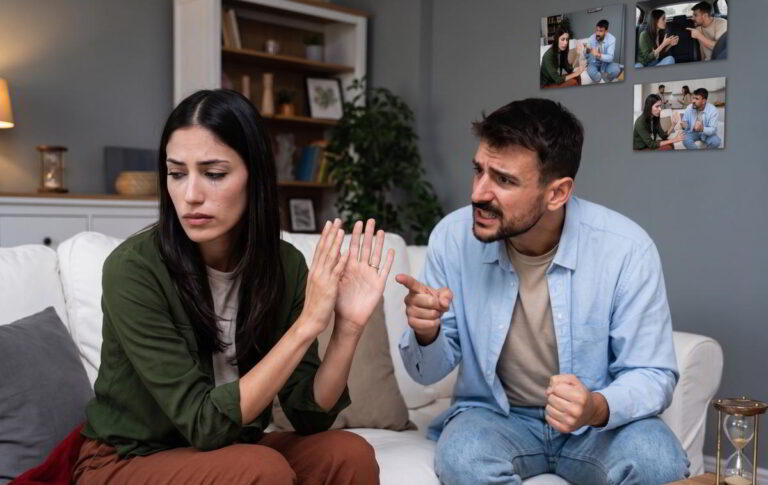

Intimacy is often considered the cornerstone of a healthy romantic relationship and a vital component of personal well-being. It is the bridge that connects us to our partners and reinforces our sense of vitality. However, despite its importance, our sexual lives are rarely linear or trouble-free. Many individuals and couples, regardless of age, gender, or orientation, face significant challenges in the bedroom.
Category: Hot, Healthy and Horny
What’s Taught in Sex Therapy? Types & Common Exercises
A fulfilling and pleasurable sex life is a vital component of overall well-being. It fosters intimacy, reduces stress, and strengthens the bond between partners. However, maintaining that connection isn’t always easy. Over time, stress, medical issues, shifting relationship dynamics, past trauma, new life changes, and the exhaustion of daily life can create significant barriers to intimacy.
50 Shades of Hysteria: Why the Feminist Critique of the Movie ’50 Shades of Grey’ is Erotophobia in Disguise
by Margie Nichols, Ph.D. The Internet has been blowing up about the movie ‘Fifty Shades of Grey,’ and most of the commentary I’ve seen is negative. Tracy Scott-Flore wrote a piece in Salon called ’50 Shades of Coercive,’ accusing the movie of contributing to the rape culture, And SFist.com published an article misleadingly called ’50 Adult Stars and Professionals On Why They Hate 50 Shades of Grey’ – misleading because many of them actually liked it and were happy to see BDSM mainstreamed. I had a hard time plowing through the book – not enough sex scenes – and wasn’t planning to see the movie. But overall, I’ve felt the book was great – because 100 million people bought it, most of them women. And tons more women bought sex toys associated with the book, implying they might be trying to make some of their sexual fantasies into reality. Because I’m a feminist and a sex radical who feels that by definition, any erotica that women likes is – feminist. Because I’m a sex therapist who feel women already feel way too much shame about their sexuality and I’m happy to see anything that validates and allows women to express… Read more »
‘What Do Women Want?’: Maybe Not Monogamy
by Margie Nichols, Ph.D. – From this feminist’s perspective, Dan Bergner’s new book, What Do Women Want? is an intriguing and important look at female sexuality. Read my blog about it, and why it validates a theory proposed by Dr. Mary Jane Sherfey in the 1970’s. https://www.goodtherapy.org/blog/feminist-sexologist-review-of-dan-bergners-what-do-women-want-0627134
The Controversy Over The Pill For Female Libido: How Much Desire Is Enough But Not Too Much?
by Margie Nichols Daniel Bergner’s new book, ‘What Do Women Want?’, is getting a lot of attention, with glowing reviews on Salon.com and the cover of a recent New York Times Sunday Book Review section. Not all reviews have been positive, but it’s pretty clear his book has shaken up some people. One take-home message from the book that has been discussed at length is Bergner’s suggestion that women are less suited for monogamy than men. But perhaps the aspect of the book most blogged about is the attempts to develop a drug that will increase a woman’s desire – but not too much. Bergner writes that the pharmaceutical companies are afraid of a drug that is ‘too good,’ one that would presumably turn women into crazed sex maniacs. It should not come as a surprise to anyone either that this is most newsworthy – it was the section of Bergner’s book made into a Sunday Times article at the beginning of June,2013, and it does smack of social manipulation through science. And it certainly shouldn’t surprise anyone that Big Pharma, ever eager to spin their efforts as serious, addressing a ‘medical problem,’ fears the bad publicity that would… Read more »
What We All Can Learn From Gay Couples
By now most people have heard about John Gottman’s research comparing gay and straight couples, publicized a few years back. Gottman, a respected psychologist and researcher, did a study of gay relationships that revealed that for the most part same and mixed sex couples had similar similar levels of relationship satisfaction, similar problems, and coped with the ups and downs of relationship life in the same ways. There were differences however: same sex couples were more upbeat in the face of conflict, used more affection and humor during fights, and employed fewer hostile, controlling emotional tactics. (Ouch. To begin with, who sounds like the more mature, responsible type of couple?) And usually, when people write about the Gottman study, that’s where the narrative about this research ends. Too bad, because if you look carefully there’s way more here. I’d like to expand on Gottman’s findings and interpret them, and then add some observations of my own. In addition to these widely reported findings, Gottman also discovered that “gay and lesbian partners displayed less belligerence, domineering, and fear tactics with each other than straight couples do……fairness and power-sharing between the partners is more important and more common in gay and lesbian relationships than… Read more »
Post Valentine Realism Part 2: How To Know Your Own Sexual Preferences – And Your Partner’s
by Margie Nichols In Part 1 I maintain that sexual compatibility is way more important in making a (monogamous) relationship satisfying than we realize. And the more I wrote, the more I realized that the vestigial Puritan fear/distaste of sex our culture carries not only makes it hard to admit that you really, really, really like sex a lot (or really, really don’t) makes it hard for people to know their own sexual selves, much less a partner’s. So let’s go back to basics. You can’t know if someone is compatible until you know your own sexual likes, dislikes, habitual behaviors. Let’s start with sexual orientation, arguably the most obvious area where mismatch is disastrous. Kinsey used to envision same/opposite sex attraction along a continuum – only at the extremes are people ‘purely’ heterosexual or homosexual. If your orientation is someplace in the range between determining your orientation is not so simple. Say you have had some opposite sex ‘crushes’ and a smattering of heterosexual sex, but mostly you fall in love and have sex with people of the same sex. Is your bit of bisexuality unimportant, or is it sure to re-surface someday. You need to figure out your… Read more »
Post Valentine Realism Part 1: Why It’s More Important Than You Think To Pick A Sexually Compatible Partner
by Margie Nichols, Ph.D. I’ve been following the E-Harmony debate with interest. No, not the controversy about their CEO’s stupid anti-gay remarks. I mean the scientific debate, about the truth of the site’s claims that it is able to match people for maximum relationship compatibility. E-Harmony has a proprietary algorithm that apparently matches people on dimensions like agreeableness, degree of intimacy desired, and importance of religion, and the in-house researchers maintain that these pairings lead to the most satisfying relationships. Critics maintain that similarities between people have been shown to be unrelated to relationship satisfaction, and that some of the traits E-Harmony matches on are predictive in only one direction. ‘Agreeableness’ is such a trait. ‘Agreeable’ people report more relationship satisfaction in general; partners who ‘match’ on low levels of this characteristic are not going to be happy even though they are similar. So the debate has me thinking about what IS important in predicting relationship happiness, what actually are the components of success. Mostly I think – hell if I know. There are too many quirky variables and indefiniable elements of attraction to be to come up with a list of ‘rules.’ Not to mention real-life factors that the… Read more »
Why Lisa Ling Is A Pioneer
by Margie Nichols, Ph.D. On January 22, 2013, Lisa Ling premiered her third season of ‘Our America,’ her documentary series on the Oprah Winfrey Network, with ‘Shades of Kink,’ an exploration of BDSM. I was the ‘expert’ featured on the show, and I was apprehensive about how this very sensitive topic would be handled. But my fears were unwarranted. The show was empathic, avoided sensationalism, and stressed the consensual, caring aspects of this type of sexuality. Ling addressed issues of feminism and racism, and she even portrayed the healing aspects of kinky play. Her subjects were real, honest, authentic – and could have lived next door to many of us. And in an article about why she did the show, published on the OWN website, Ling stressed the discrimination faced by people in the ‘kink scene’ and echoed a comment I made on the show: the real danger kinky people face is not from their sexual practices, but from social condemnation – and punishment. So I don’t get some of the criticism. While many of the comments posted were positive, there were two types of critiques. Not surprisingly, there were those who were shocked, appalled, saw the show as obscene… Read more »
The Truth about the BDSM Community’s ‘Consent Counts’ Project
by Margie Nichols, Ph.D. Last November, Harvard’s approval of a BDSM club on campus sparked news stories about the prevalence of these organizations on college campuses, and the predictable backlash against them. Some articles wrote of what seemed like an upsurge of rapes –non consensual BDSM sex, or kinky sex that violated someone’s ‘boundaries’ or wishes – as a result of these clubs. And a quotation of Susan Wright’s, the head of the National Coalition for Sexual Freedom, the advocacy/legal support group protecting the kink, swing, and poly communities, has been repeated as ‘proof’ of BDSM’s ‘violent nature.’ Susan was quoted as saying over 30% of the 5,000 reports they had so far from their ‘Consent Counts’ Project involved transgressions of consent. The author used her quote as an example of the ‘prevalence’ of violence in the kink community. In a blog I wrote at the time I pointed out that the percentages quoted put violence in the kink community at about the same or a little less than that of ‘vanilla’ people. At the time, I wasn’t aware that the nature of the Consent Project, as NCSF calls it, had been distorted so greatly. The Consent Counts Project isn’t really about nonconsensual… Read more »